How Does Sugarreset Work? The Ingredients and Their Roles
Sugarreset combines chromium with a blend of plant extracts studied for glucose and weight.
Each 1 mL has 0.7 mcg chromium and a 200 mg blend of 22 ingredients. Gymnema, chromium, African mango and ginseng are the ones studied most for glucose or weight.
For the daily dose, see how to use the drops.
How is Sugarreset supposed to work?
A daily liquid blend built around ingredients studied for glucose and weight topics.
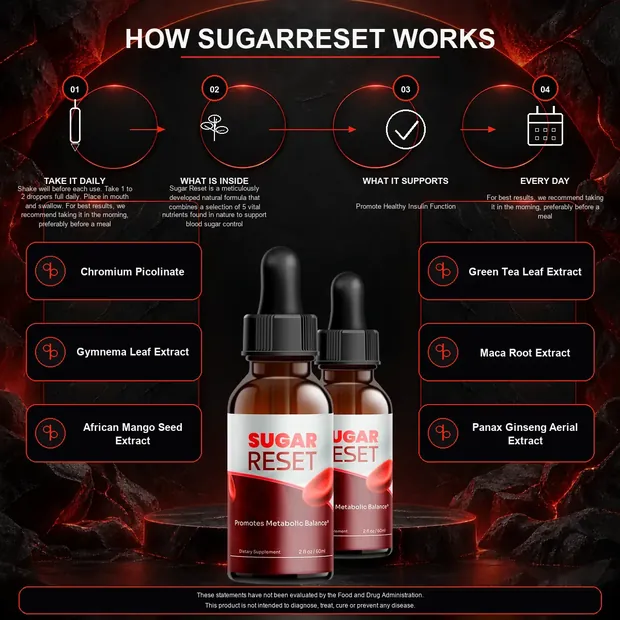
The maker's idea is simple. A daily dropper of Sugarreset delivers chromium plus a blend of herbs and amino acids linked to insulin and metabolism topics. The label sums it up as "Promotes Metabolic Balance".
Each headline ingredient has some research behind it. The key question is dose. Studies gave people hundreds of milligrams or more of one ingredient. Here, 22 ingredients share 200 mg per 1 mL.
This page walks through each ingredient, the dose it was studied at, and what that means for the drops. The full list is on the Sugarreset ingredients page.
What are gymnema and chromium in Sugarreset studied for?
The two ingredients most tied to insulin topics.
Gymnema: glucose studies in type 2 diabetes
Gymnema has the most glucose research of the six. A 2021 review pooled 10 small studies in adults with type 2 diabetes (Devangan et al., 2021). Standardized extracts lowered fasting glucose, after-meal glucose and HbA1c compared with control.
Those people had a diagnosis and many took medicine. Doses were high, often around 400 mg three times a day (LiverTox, Gymnema). LiverTox also lists gymnema as a rare possible cause of liver injury.
Chromium: insulin's helper mineral
Chromium helps insulin move glucose into cells. Trials gave 200 to 1,000 mcg a day of chromium picolinate (Onakpoya et al., 2013 (chromium)). In weight studies, the average extra loss was about 0.5 kg, which the authors called modest.
The NIH says chromium results for glucose and weight are mixed and often small (NIH ODS, Chromium). Sugarreset gives 0.7 mcg per dropper.
What do studies say about African mango and Panax ginseng in Sugarreset?
Early signals, weak evidence and much larger doses.
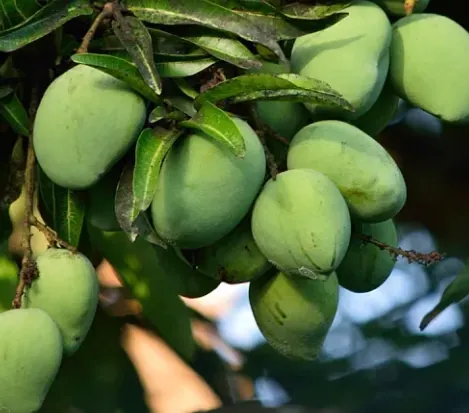
African mango
One 10-week trial gave 150 mg twice daily and reported lower weight and fasting glucose (Ngondi et al., 2009). A review rated all such trials poor quality (Onakpoya et al., 2013 (African mango)).

Panax ginseng
A review of 16 trials, median 8 weeks, found a modest fall in fasting glucose but no change in HbA1c or insulin (Shishtar et al., 2014). Doses were in grams, not milligrams.
Both stories are thin. The African mango evidence rests on three small trials with 208 people in total. The NIH calls the ginseng evidence inconclusive and notes insomnia as the most common side effect (NCCIH, Asian ginseng).
Why are green tea, guarana and maca in Sugarreset?
The part of the formula you are most likely to notice.
Green tea and guarana add natural caffeine. Caffeine is the ingredient most people will actually feel, often as alertness within an hour.
The FDA says up to 400 mg of caffeine a day is not generally linked to harm in healthy adults (FDA, Caffeine). The caffeine per Sugarreset serving is not published. NIH reviewers rate caffeine and green tea weight effects as small (NIH ODS, Weight-loss supplements).
Maca is different. Research looked at it for sexual function at 1.5 to 3.5 g a day, with limited results (Shin et al., 2010). It has not been studied for blood sugar. It is likely here as a general food-root tonic.
- Green tea leaf
- Catechins plus natural caffeine
- Guarana seed
- One of the richest plant sources of caffeine
- Maca root
- Andean food root; not a blood sugar ingredient
- Caffeine per serving
- Not published
Does the Sugarreset dose match the research?
The science is real. The amounts are not the same.
Each headline ingredient, what it was studied for and at what daily dose
| Ingredient | Studied for | Daily study dose | Sugarreset per 1 mL |
|---|---|---|---|
| Gymnema | Glucose in type 2 diabetes | About 1,200 mg (LiverTox, Gymnema) | Share of 200 mg |
| Chromium | Glucose, weight | 200–1,000 mcg (Onakpoya et al., 2013 (chromium)) | 0.7 mcg |
| African mango | Weight, fasting glucose | 300 mg (Ngondi et al., 2009) | Share of 200 mg |
| Panax ginseng | Fasting glucose | Gram amounts (Shishtar et al., 2014) | Share of 200 mg |
| Green tea / caffeine | Alertness, weight | Up to 400 mg caffeine limit (FDA, Caffeine) | Not published |
| Maca | Sexual function | 1,500–3,500 mg (Shin et al., 2010) | Share of 200 mg |
Do Sugarreset liquid drops change the dose math?
Form changes how you take it, not how much is inside.
No. A liquid can be easier to take and starts to mix in the mouth. But the label says to place it in the mouth and swallow, so it is absorbed through the gut like a capsule.
Absorption also cannot add milligrams that are not there. If a study used 300 mg and a serving holds far less, the gap stays. Our post on liquid drops vs. capsules covers the form in more depth.
What liquid form helps
- Easy for people who dislike pills
- Dose can be one or two droppers
- Lemon and stevia mask bitter herbs
What it does not change
- Swallowed, so no special absorption route
- Glycerin and water take up volume
- Amounts per ingredient still unknown
What would it take to prove Sugarreset works?
Four steps that would turn a promising label into a proven product.
Publish the amounts
List the milligrams of each of the 22 blend ingredients so they can be compared with studies.
Test the finished drops
Run a placebo-controlled trial of the actual formula, in the people it is sold to.
Measure real outcomes
Track the same markers studies use over 8 to 12 weeks or more.
Share lab results
Post an independent certificate showing the bottle holds what the label says.
None of these exists yet for Sugarreset. Until they do, treat the label claims as the maker's goals, not proven results. The claims carry the FDA note: These statements have not been evaluated by the Food and Drug Administration. This product is not intended to diagnose, treat, cure, or prevent any disease.
Supplements cannot legally claim to treat diabetes (FDA and FTC warning letters, 2021). If you have diabetes or prediabetes, supplements do not replace your care (NCCIH, Diabetes and supplements). Read our guide to supplements and diabetes medicines before you start.
Sources for how Sugarreset ingredients were studied
Each entry shows the dose studied and the main finding.
- Devangan S, et al (2021), “The effect of Gymnema sylvestre supplementation on glycemic control in type 2 diabetes patients: a systematic review and meta-analysis”, Phytotherapy Research. SourceDose studied: 10 studies, 419 adults with type 2 diabetes; standardized extracts. Gymnema lowered fasting glucose, post-meal glucose and HbA1c in people with type 2 diabetes; the studies were small.
- LiverTox (NIDDK): “Gymnema sylvestre”, NCBI Bookshelf. SourceDose studied: Typical dose 400 mg three times daily. Gymnema is a possible rare cause of liver injury.
- Onakpoya I, Posadzki P, Ernst E (2013), “Chromium supplementation in overweight and obesity: a systematic review and meta-analysis of randomized clinical trials”, Obesity Reviews. SourceDose studied: 200–1,000 mcg a day of chromium picolinate. Weight loss was about 0.5 kg more than placebo, a clinically modest effect.
- NIH Office of Dietary Supplements: “Chromium: Fact Sheet for Health Professionals”. SourceDose studied: Trials used 100–1,000 mcg a day; DV 35 mcg. Weight effects are small and of debatable clinical relevance; chromium may add to diabetes medicines and reduce levothyroxine absorption.
- Ngondi JL, Etoundi BC, Nyangono CB, Mbofung CM, Oben JE (2009), “IGOB131, a novel seed extract of the West African plant Irvingia gabonensis, significantly reduces body weight and improves metabolic parameters in overweight humans in a randomized double-blind placebo controlled investigation”, Lipids in Health and Disease. SourceDose studied: 150 mg twice daily for 10 weeks. Weight and fasting glucose fell versus placebo in one small trial; later reviews rated the evidence weak.
- Onakpoya I, et al., “The efficacy of Irvingia gabonensis supplementation in the management of overweight and obesity: a systematic review of randomized controlled trials”, Database of Abstracts of Reviews of Effects (DARE). NCBI Bookshelf. SourceDose studied: 3 trials, 208 people. All trials were of poor quality; the authors could not recommend African mango for weight loss.
- Shishtar E, et al (2014), “The effect of ginseng (the genus Panax) on glycemic control: a systematic review and meta-analysis of randomized controlled clinical trials”, PLoS One. SourceDose studied: 16 trials, median 8 weeks. Fasting glucose fell modestly; no significant effect on HbA1c or insulin.
- U.S. Food and Drug Administration: “Spilling the Beans: How Much Caffeine is Too Much?”. SourceDose studied: Up to 400 mg a day for healthy adults. 400 mg a day is not generally linked to harmful effects in healthy adults; sensitivity varies.
- Shin BC, Lee MS, Yang EJ, Lim HS, Ernst E (2010), “Maca (L. meyenii) for improving sexual function: a systematic review”, BMC Complementary and Alternative Medicine. SourceDose studied: 1.5–3.5 g a day. Maca has been studied mainly for sexual function, with limited evidence; not for blood sugar.
- National Center for Complementary and Integrative Health: “Diabetes and Dietary Supplements: What You Need To Know”. SourceDose studied: Fact sheet. Supplements should not replace proven diabetes care; some may interact with diabetes medicines.
Sugarreset how-it-works questions
How does Sugarreset work?
The maker says its 23 ingredients support healthy insulin function and metabolic balance. Several of them, such as gymnema, chromium and ginseng, have been studied for glucose topics. No study has tested the Sugarreset formula, and the per-serving amounts are far below study doses.
Has any clinical trial tested Sugarreset itself?
Not that we can find. The sales page and label cite no trial of the finished drops. The research on this page is about single ingredients at their own doses, which is a different thing.
Is Sugarreset a treatment for diabetes?
No. It is a dietary supplement and is not intended to diagnose, treat, cure or prevent any disease. If you have diabetes or prediabetes, keep following your doctor's plan and ask before adding any supplement.
Do liquid drops absorb better than capsules?
Liquid is easy to swallow and starts to mix in the mouth. The label still says to swallow it, so it travels the same route as a capsule. Faster mixing does not turn 9 mg into 300 mg.
Why does Sugarreset include caffeine sources?
Guarana and green tea add natural caffeine, which many people feel as alertness. The amount per serving is not published. That is one reason the maker suggests taking the drops in the morning.
Would taking more droppers make Sugarreset work better?
Do not try it. The label says 1 or 2 droppers a day and warns not to exceed that. More droppers also means more caffeine and xylitol. Ask a doctor if you want a stronger single-ingredient product.
Ready to try Sugarreset?
Order from the U.S. authorized merchant, keep your order email, and you are covered by the 60-day money-back guarantee. Questions before you buy? The Sugarreset contact page lists every desk.
Keep reading
Ingredients
All 23 active ingredients, the 200 mg blend math, research doses and the liquid base.
Read more →Benefits
Each label claim matched with its ingredients, study doses and an evidence rating.
Read more →Supplements & diabetes meds
Ingredients to discuss, low blood sugar signs, doctor questions and an honest 10-point score.
Read more →
